Particle size distribution
Particle size and distribution influence the minimum velocity and the stability of the transport process.
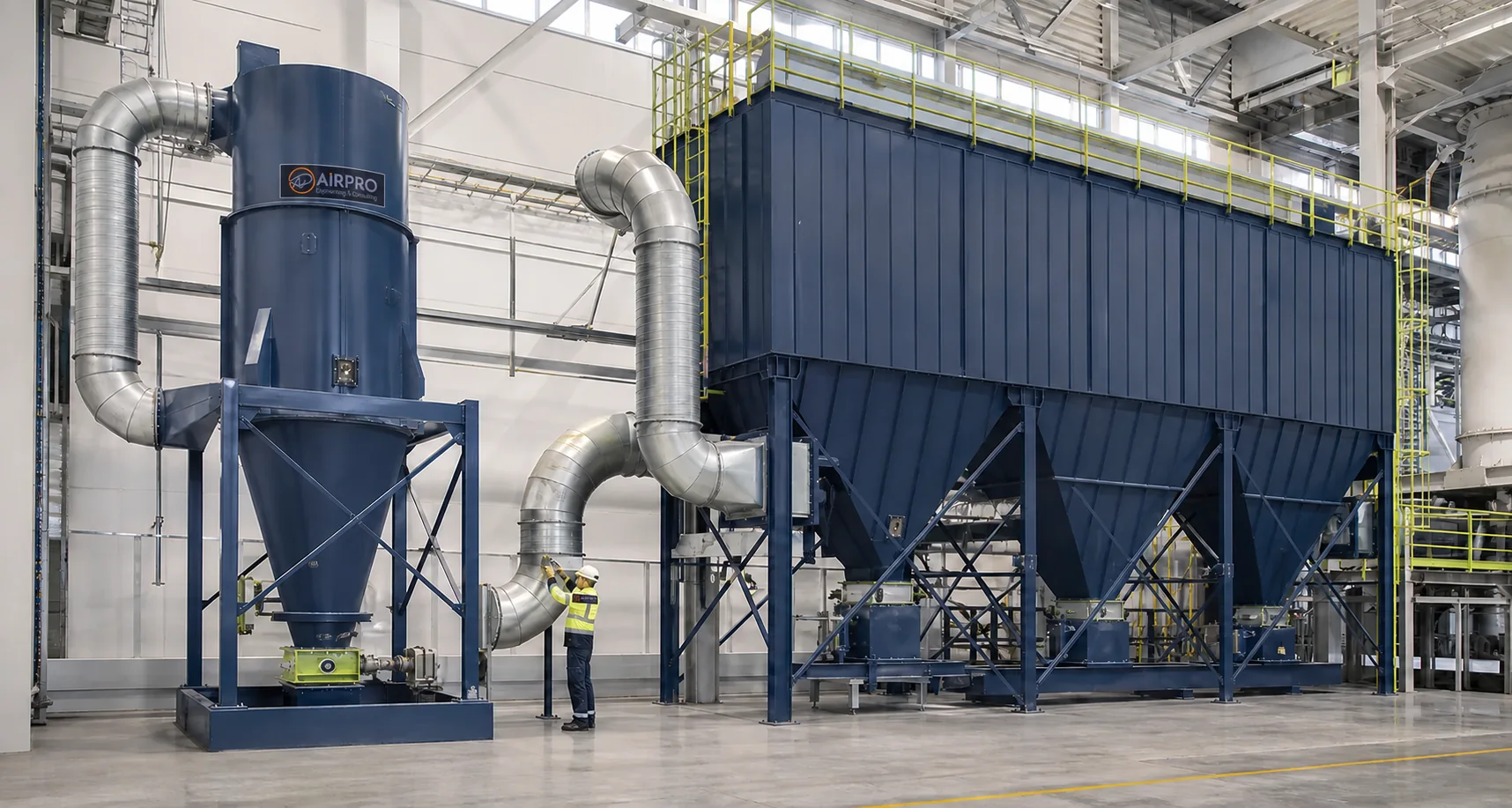
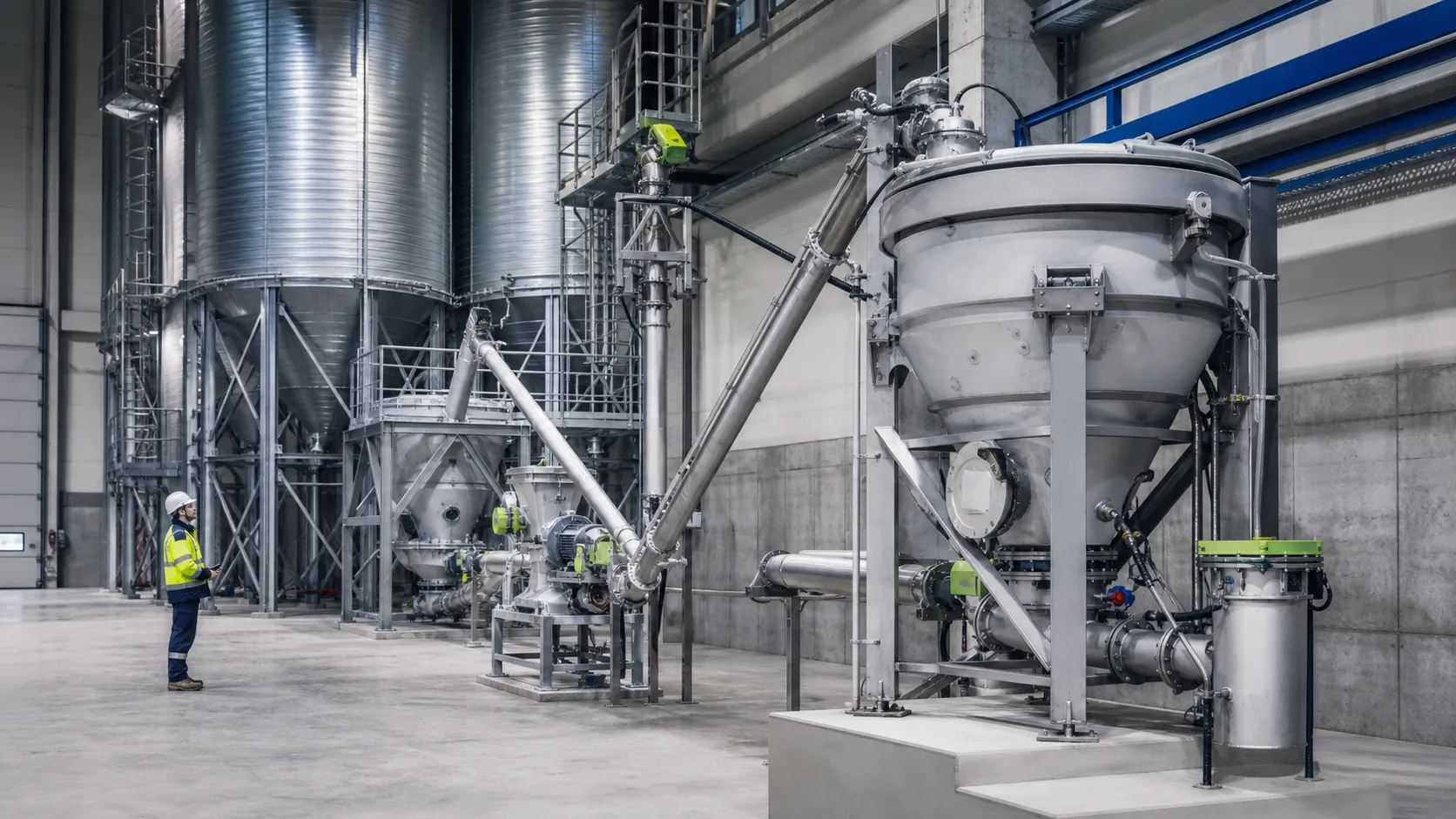
Convey powders, granules and bulk materials using a closed system, tailored to the product and integrated into your production line.
 AIRPRO EXPERTISE
Powders, granules and waste materials do not react in the same way to air, acceleration and changes in direction. Sizing therefore begins with the material, not with the diameter of the pipework.
Particle size and distribution influence the minimum velocity and the stability of the transport process.
It relates the mass flow rate to the product volume and the flow regime within the duct.
The product may break, overheat or cause wear to the elbows if the speed and route are incorrectly selected.
A sticky or moisture-sensitive product may form deposits and disrupt the feed.
Consistency depends on four continuous functions: supplying, setting in motion, transporting and separating without interrupting the flow.
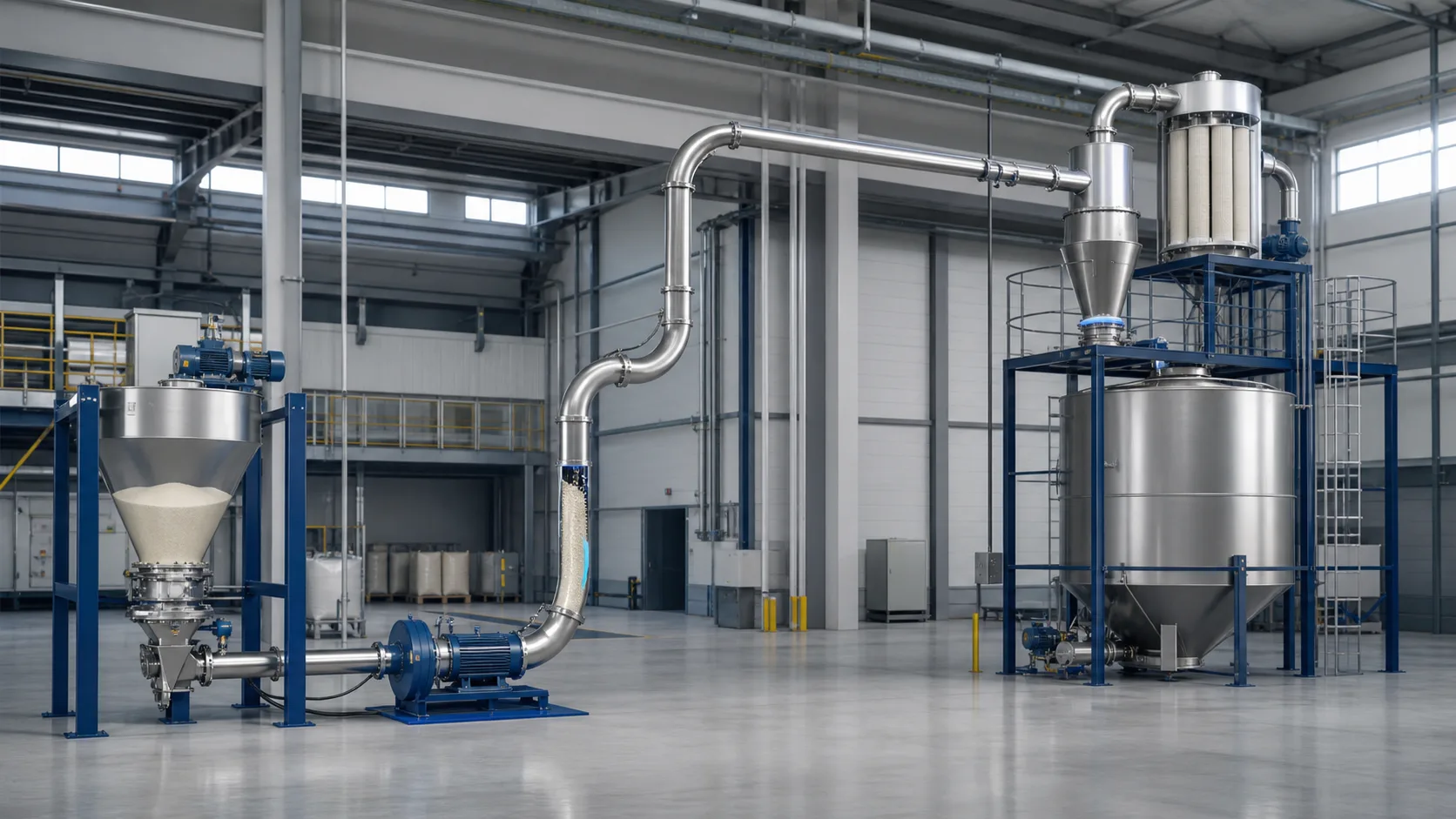
To introduce a steady flow without compromising the system’s airtightness.
Create the pressure differential corresponding to the selected operating mode.
Keep the product moving through straight sections, bends and gradients.
Remove material from the transport air at the receiving point.
The difference lies not in a trade name, but in the relationship between the material, air, velocity and pressure within the duct.
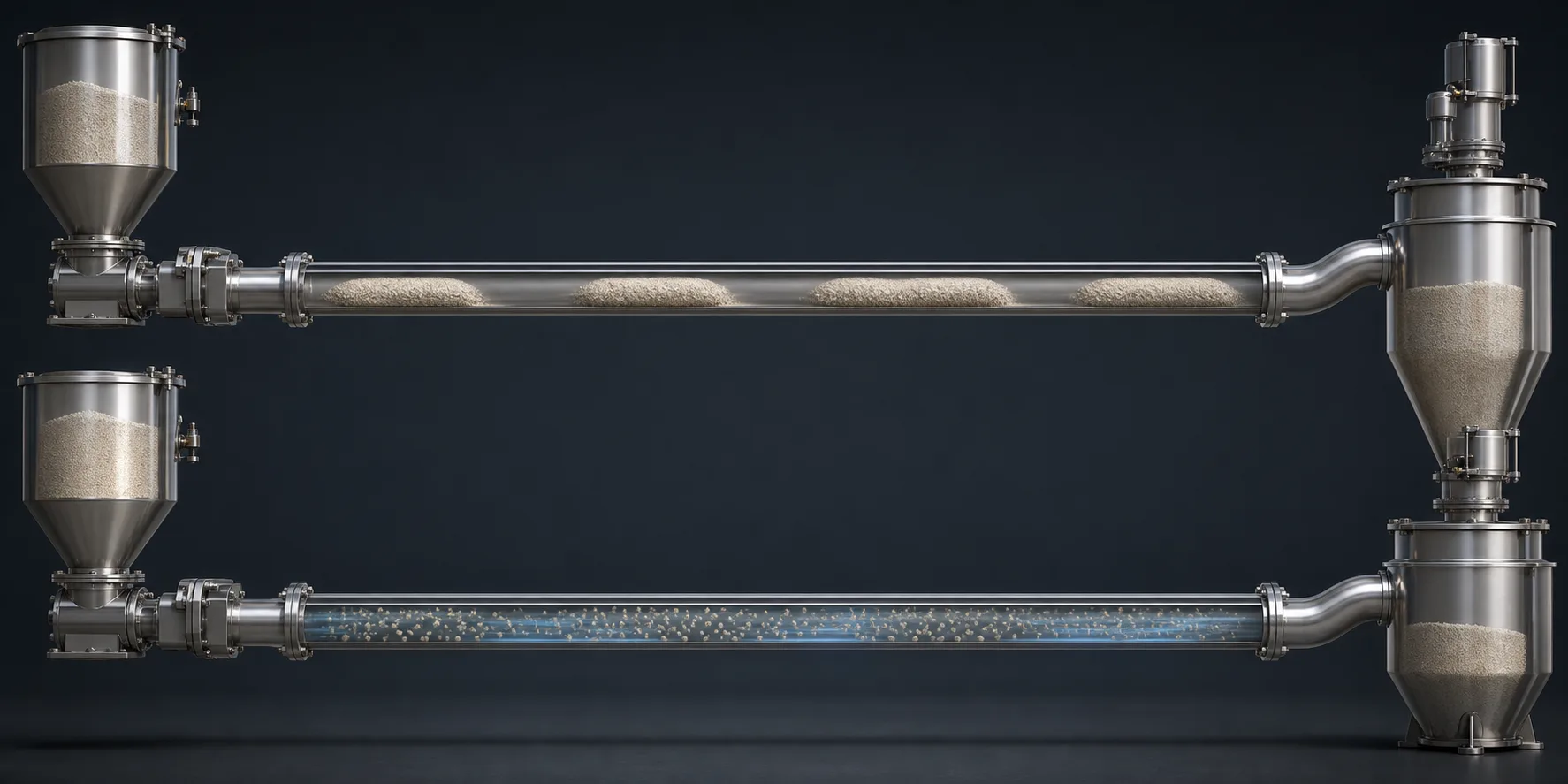
To be considered in order to protect fragile products or minimise wear and tear, with a suitable flow rate and pressure.
Suitable for a wide range of continuous applications where the product can withstand the speed and the intended travel distance.
The flow path is never merely a design detail. It influences pressure, the stability of the plug or suspension, wear and the integrity of the product.
Bends and changes of direction are just as important as the straight section.
Vertical rises alter the required pressure and the behaviour of the product.
Radius, material and orientation influence wear, breakage and pressure drops.
Valves, diverters and separators must remain compatible with the transport system.
The symptoms help to distinguish between a problem with the feed, speed, route or final separation.
Insufficient flow rate, irregular supply, humidity or a poorly designed low point.
Excessive speed, too many bends or an operating speed unsuitable for the fragility of the system.
Repeated impact during changes of direction and unsuitable ducting materials.
Inadequate air supply, leaks, impaired separation or insufficient available pressure.
An initial description of the product and the system layout helps to define the possible operating conditions, the relevant tests and the installation constraints.
Describe my conveying project or call +33 7 57 69 08 40Key considerations before sizing a pneumatic conveying system.
The dense phase conveys a high concentration of material at a lower velocity. The dilute phase uses a higher air velocity with a lower concentration. The product and the route determine the appropriate mode.
The conveying system, velocities, bends, transitions and feed points are analysed together. Fragile or abrasive products require particular attention to be paid to the route and the components of the conveying line.
Distance, height difference, bends and changes in cross-section affect pressure drops and the behaviour of the fluid. Even a preliminary plan significantly improves the quality of the design.

Describe your installation, issue or objective. An AIRPRO engineer will provide an initial technical assessment.