Particle size distribution
Particle size and distribution determine the pre-separation process, the filter medium and the transport velocity.
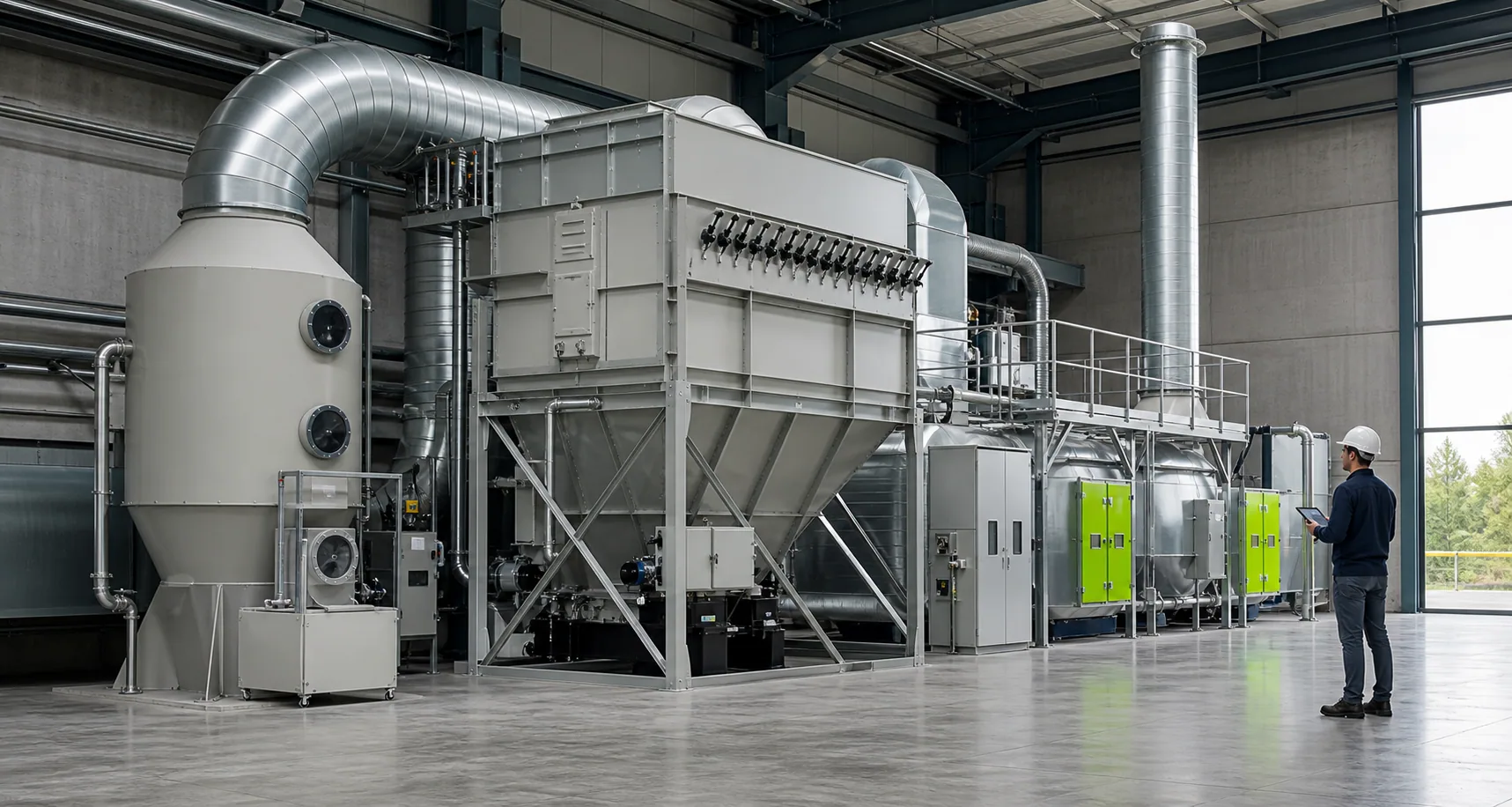
Systems designed to capture dust at source, protect operators and ensure the long-term protection of your production equipment.
 AIRPRO EXPERTISE
Before discussing fans or filters, AIRPRO analyses the behaviour of the material and its emission patterns. Two workshops producing dust that appears similar to the naked eye may require very different systems.
This initial assessment helps to avoid oversizing the system, selecting an unsuitable filter medium or shifting the problem to the recovery stage.
Particle size and distribution determine the pre-separation process, the filter medium and the transport velocity.
The concentration and its variability determine the filter area, the cleaning process and the discharge system.
Sticky dust or a gas stream close to the dew point can cause deposits and premature clogging.
The product, speeds and changes in direction all influence the wear and tear on ducts, bends and separation components.
The combustible or reactive nature of the dust must be identified so that appropriate safeguards can be incorporated at the design stage.
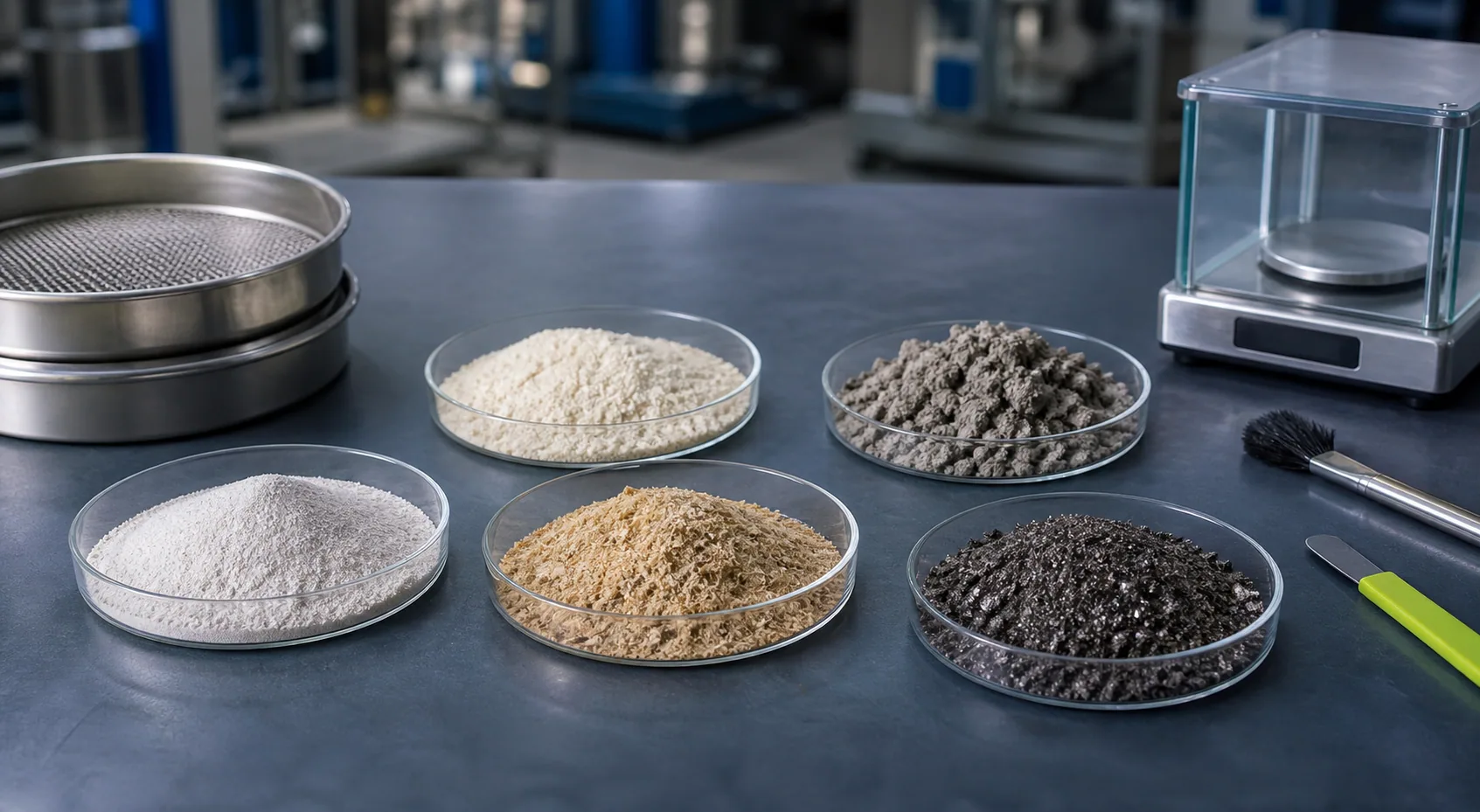
Consider the particle size, moisture content and behaviour of the product before selecting the separation technology.
Each technology fulfils a specific role. The right design can combine them to protect the filter, stabilise performance and organise product recovery.
Heavy particles, high load
To relieve the filtration stage and recover a fraction of the product.
Its effectiveness varies significantly depending on the size and density of the particles.
High flow rates, industrial dust
Provide a large filter area with organised cleaning.
The filter medium must remain compatible with the temperature, humidity and chemical composition of the flow.
Fine dust, space-constrained installation
Provide a large filter area within a compact footprint.
Fibrous or sticky dust requires special analysis.
High dust load and requirement for final filtration
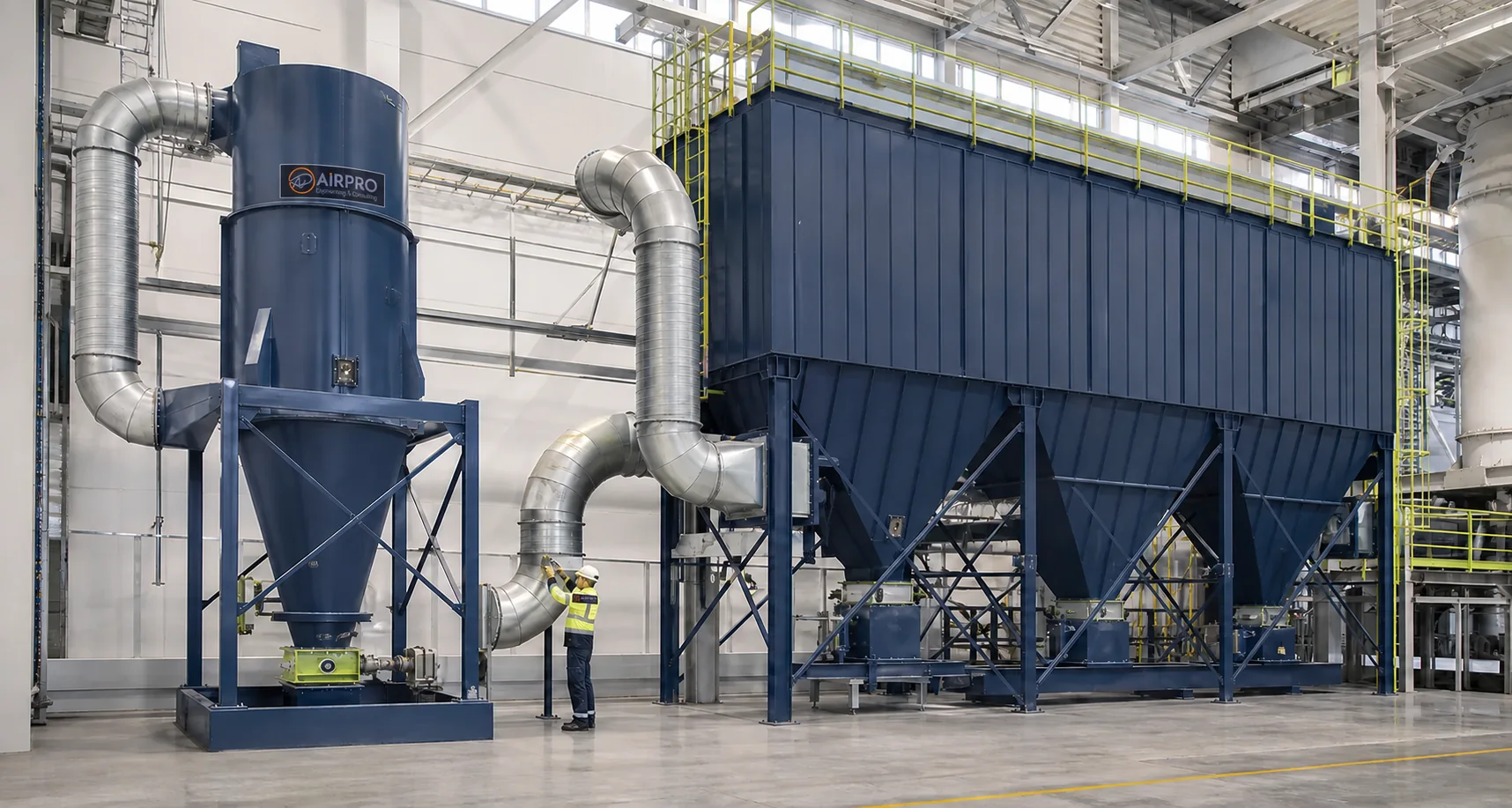
Combining centrifugal pre-separation and filtration within a single process line.
Airflow balance and continuous extraction are essential for the stability of the system.
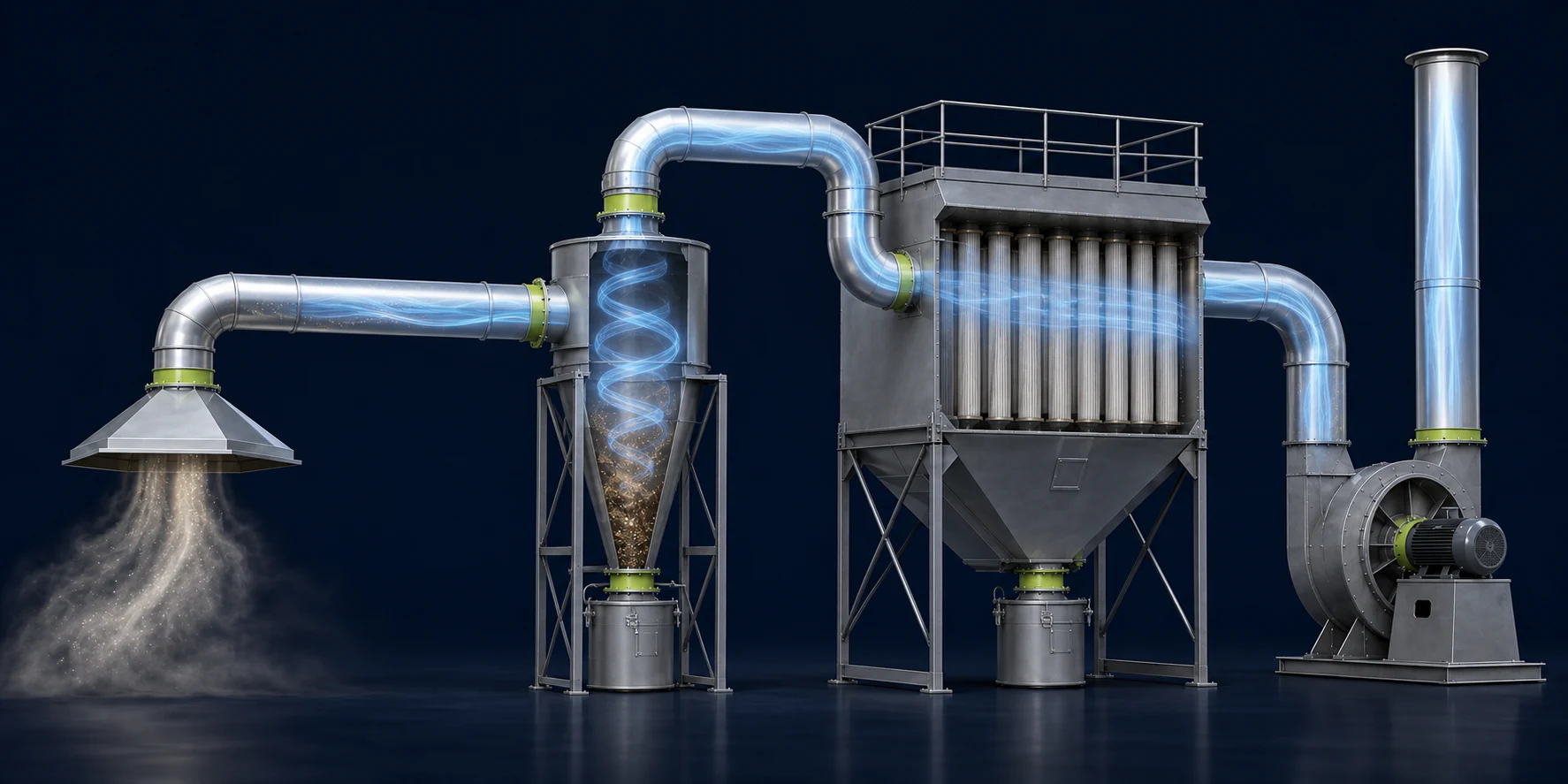
An excellent filter cannot compensate for poor air intake. AIRPRO designs the system as a technical continuum in which each stage prepares the way for the next.
The hood intercepts the plume at the point where it forms. Its position, its opening and the make-up air determine the actual effective flow rate.
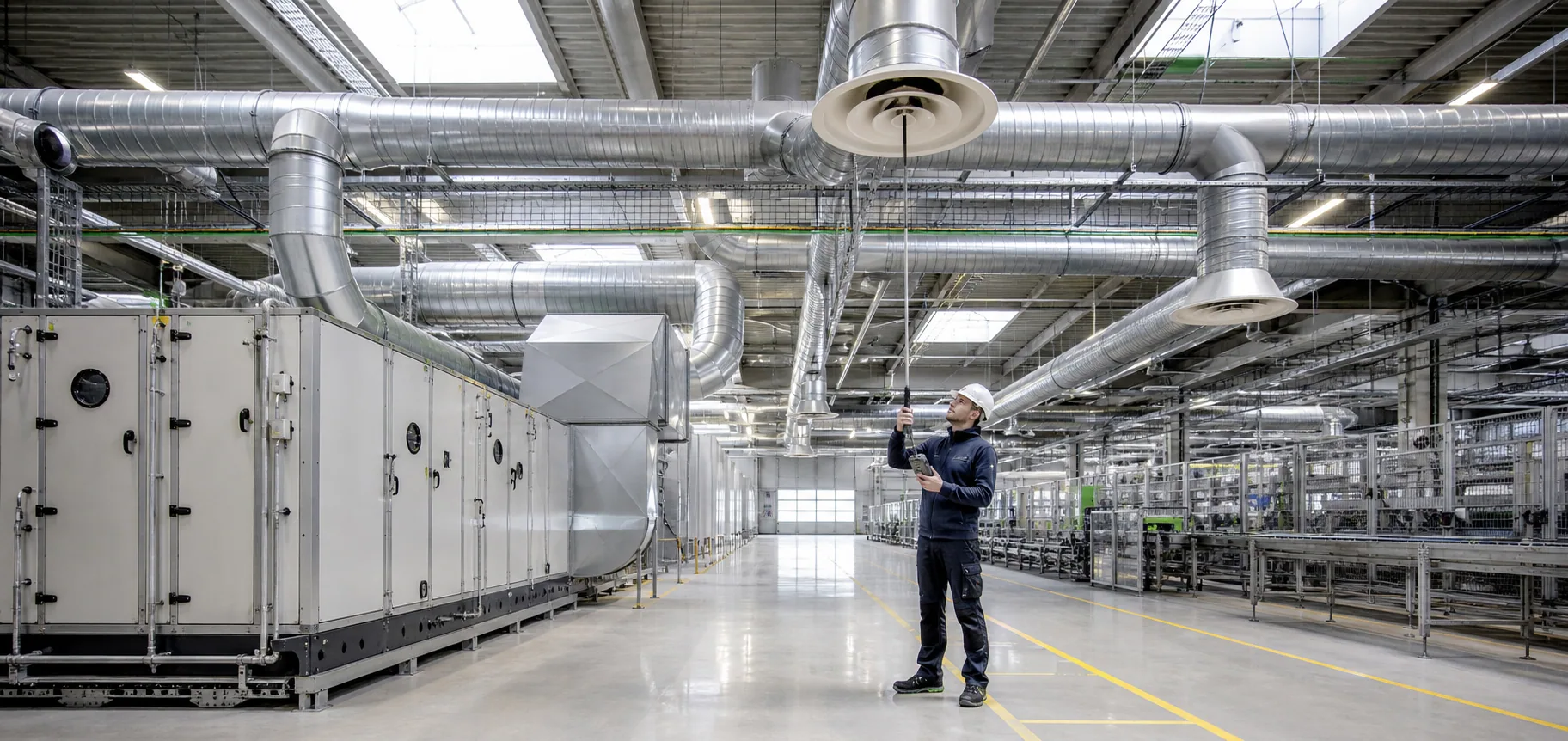
Critical point: capture geometryThe network keeps the particles in motion whilst minimising pressure drops, noise and wear. Each branch must remain balanced.
Critical point: velocity in the ductsCyclones, bags or cartridges are assembled according to the load and the desired degree of fineness, not according to a predefined catalogue solution.
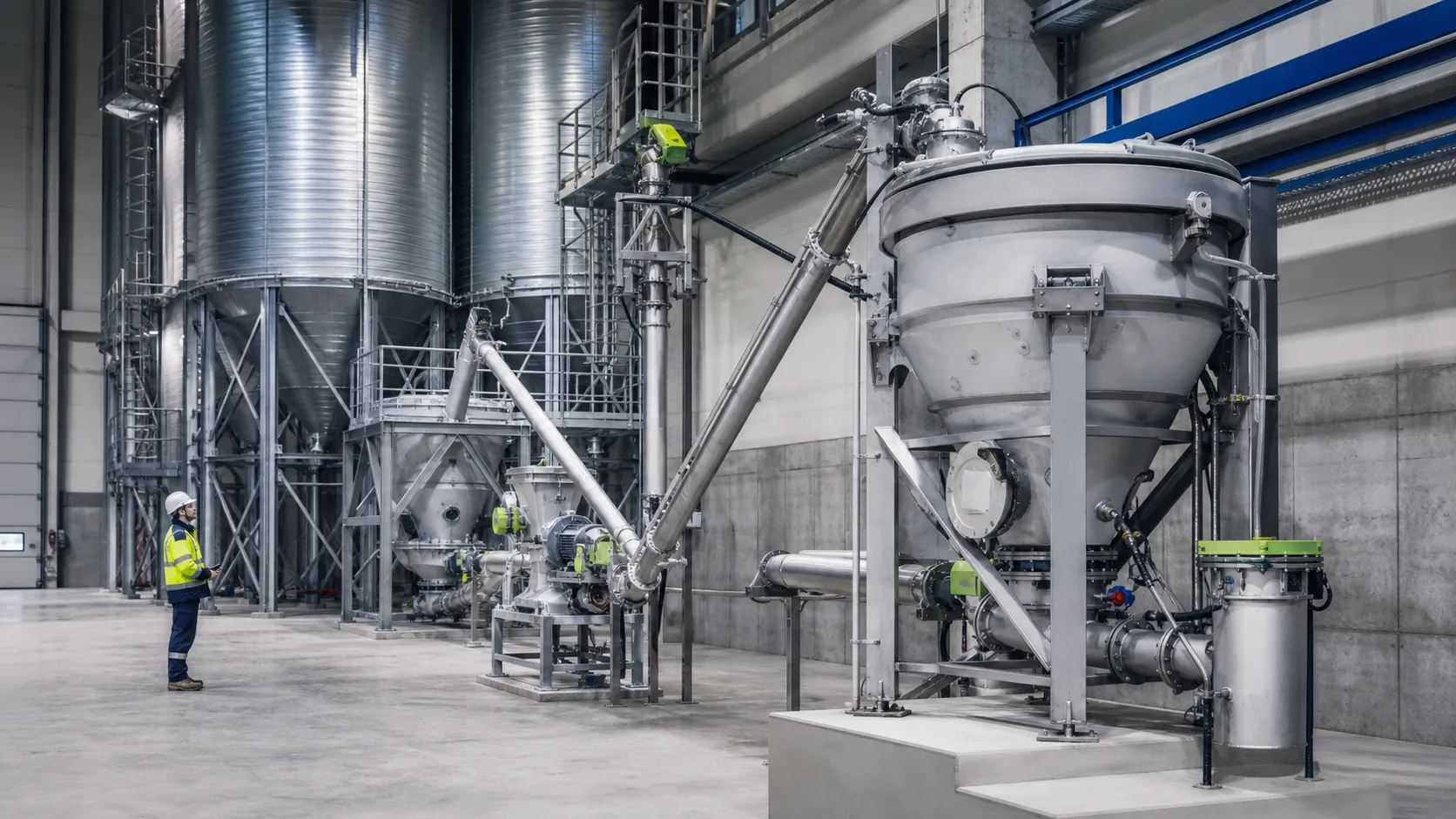
Critical factor: dust/media interactionAirlocks, screw conveyors, big bags or process recovery systems are integrated into the line to maintain airtightness and simplify operation.
Critical point: continuity of extractionThe symptoms observed in the workshop enable us to identify the appropriate measures and checks to carry out before modifying the installation.
First examine the enclosure, any unwanted openings, the available flow rate and the make-up air.
Check speeds, horizontal sections, bends, imbalances and shutdown phases.
Check for overloading, humidity, unsuitable filter media, insufficient cleaning or faulty exhaust.
Check for leaks, dampers, pressure drops, fouling and operation outside the specified range.
These indicators guide the diagnosis; they do not replace flow and pressure measurements or inspection of the system.
You do not need a finalised specification. This initial information enables an engineer to understand the process and prepare the right questions.
Submit my enquiry or call +33 7 57 69 08 40Initial answers to frequently asked questions regarding industrial dust extraction projects.
Not always. The cyclone mainly separates the heaviest particles and can reduce the load on the filter. The final level of filtration depends on particle size, concentration and the discharge target.
The choice depends, in particular, on the type of dust, the required filter area, temperature, humidity, available space and the cleaning method. AIRPRO assesses these constraints before selecting the filter media and system design.
Close-range extraction limits dispersion within the workshop and avoids the need to move an unnecessarily large volume of air. The geometry of the extraction hood is just as important as the extraction flow rate.
It is necessary to characterise the dust and the process, identify the simultaneous collection points, and ascertain the available layout, operating conditions and the destination of the collected dust. On-site measurements may supplement this data.
Yes, depending on the nature and cleanliness of the collected product. The discharge system must then be designed in conjunction with the cyclone or filter to prevent air ingress, leaks and unnecessary handling.
Where dust may form an explosive atmosphere, its characteristics, ignition sources and the areas concerned must be assessed before determining the dust collection, filtration, cleaning and protective measures.
AIRPRO supports industrial projects, particularly in France, Germany, Switzerland and Tunisia. The organisation of surveys, studies and monitoring is tailored to the location and scope of each assignment.
Describe your installation, issue or objective. An AIRPRO engineer will provide an initial technical assessment.