Nature of the compound
Solubility, polarity, reactivity and condensation temperature determine the possible treatment routes.
Identify the pollutant, capture it at source and select the treatment technology compatible with your process.
 AIRPRO EXPERTISE
Two processes with the same name may require different solutions. AIRPRO links the properties of the compound to the actual process conditions before discussing equipment.
This characterisation avoids selecting a technology that is effective on paper but unstable in the face of production fluctuations.
Solubility, polarity, reactivity and condensation temperature determine the possible treatment routes.
The average value is not sufficient: peaks and transient phases may determine the design parameters.
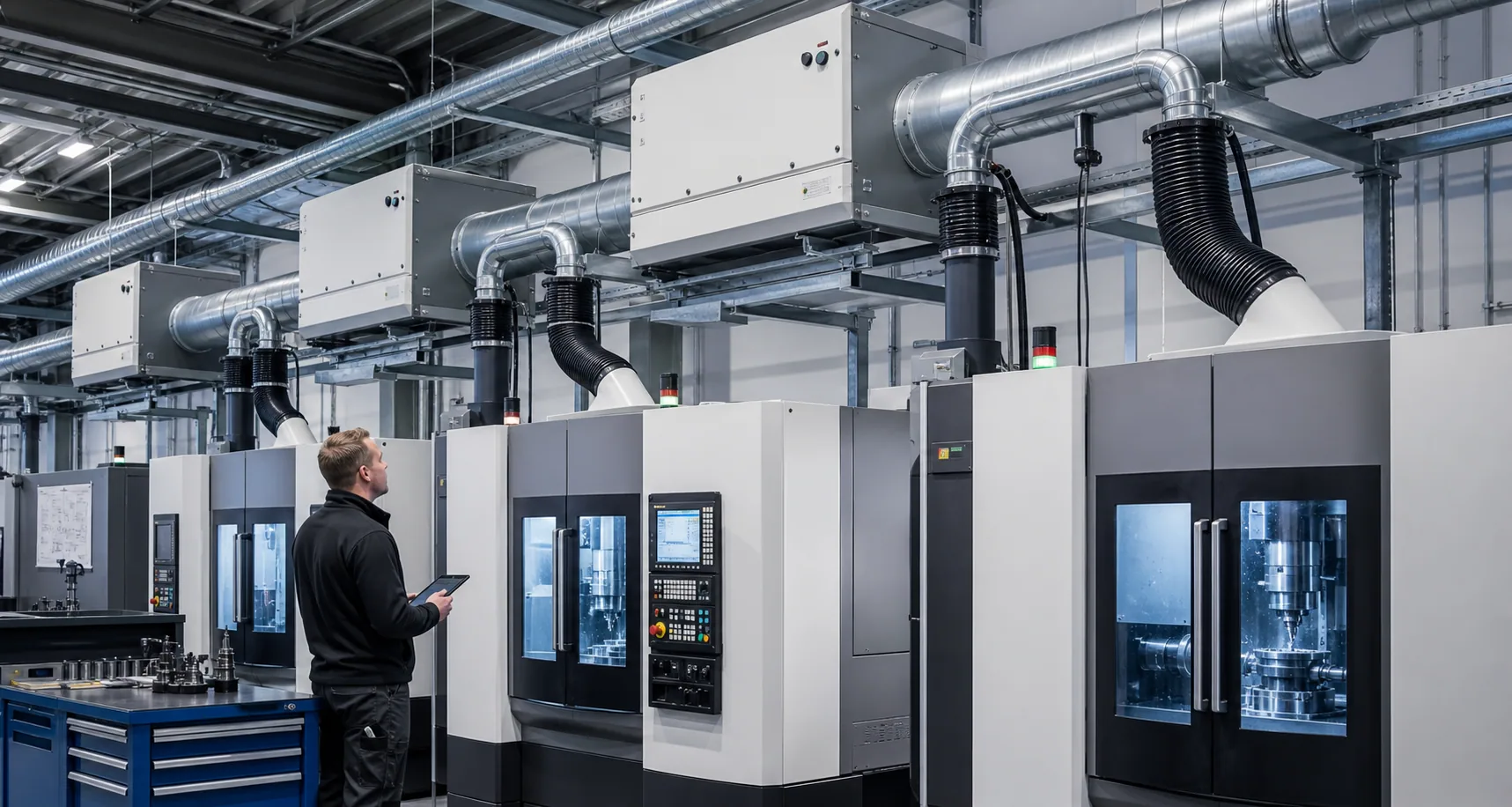
The containment and extraction systems determine the actual volume of air sent to the equipment.
Temperature, humidity and the presence of dust directly influence the stability of the process.
The more the emission is contained and intercepted at an early stage, the less air needs to be moved, the smaller the ductwork system needs to be, and the less unnecessary volume needs to be treated.
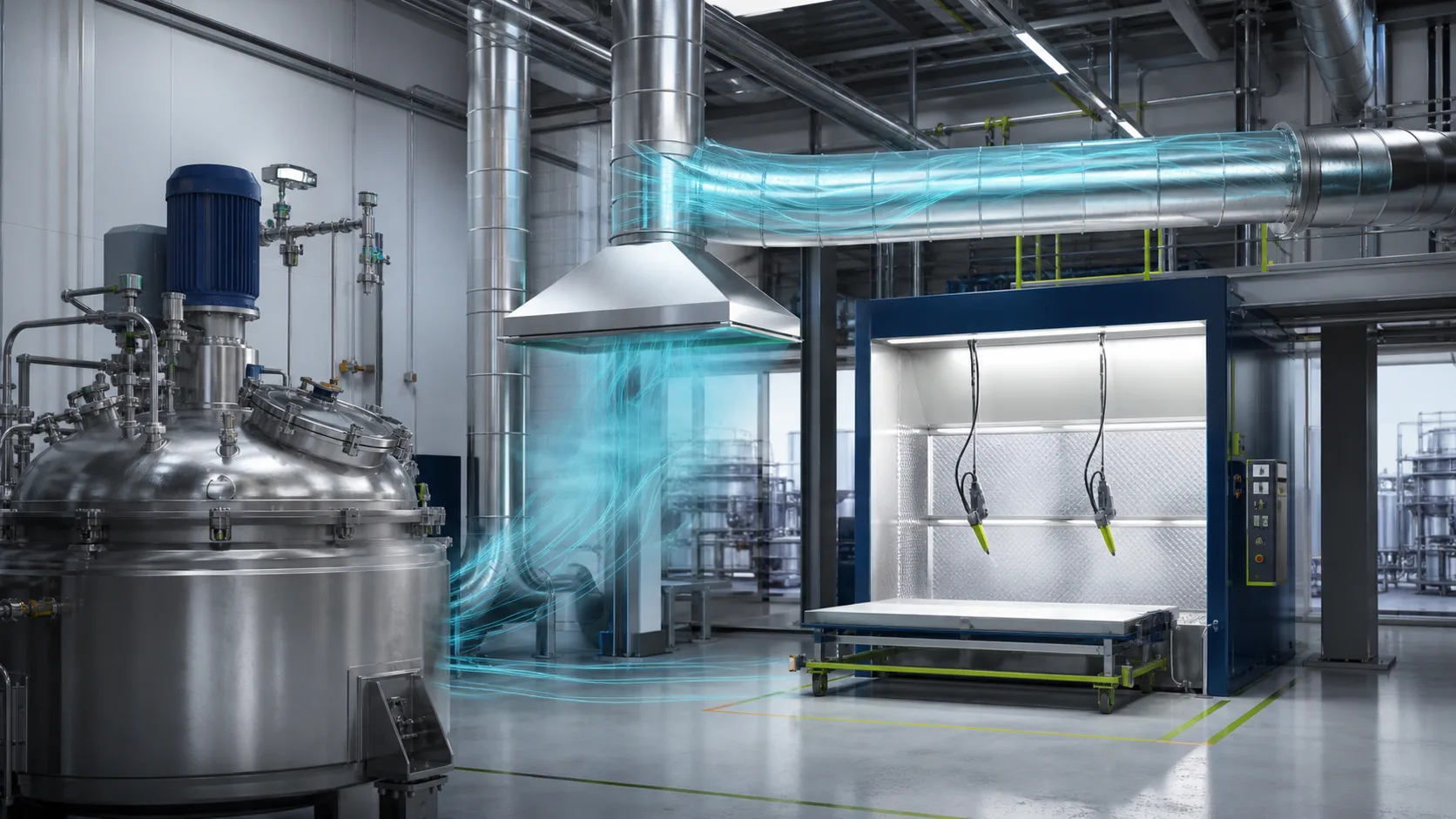
Minimise the gap between the process and the workshop to limit the required flow rate.
Position the extraction point in the actual path of the vapours.
Maintain a leak-tight system, compatible with the compound and the flow conditions.
The right approach is a balance between the chemical composition of the compound, the flow profile, the expected performance and day-to-day operation.
Transfer to a liquid
Sufficiently soluble compounds and gas streams compatible with a scrubbing reagent.
Choice of liquid, reagent consumption and effluent treatment.
Binding to a solid medium
Appropriate concentrations and molecules with good affinity for the medium.
Saturation, regeneration, humidity and the risk of overheating.
Processing of the compound
Fluxes that can be destroyed by thermal, catalytic or biological means.
Variability, temperature, energy and any secondary compounds.
Pre-treatment, main treatment, fan, instrumentation and discharge are designed as a continuous process. Depending on the flow, the technologies may be used alternatively or in combination.
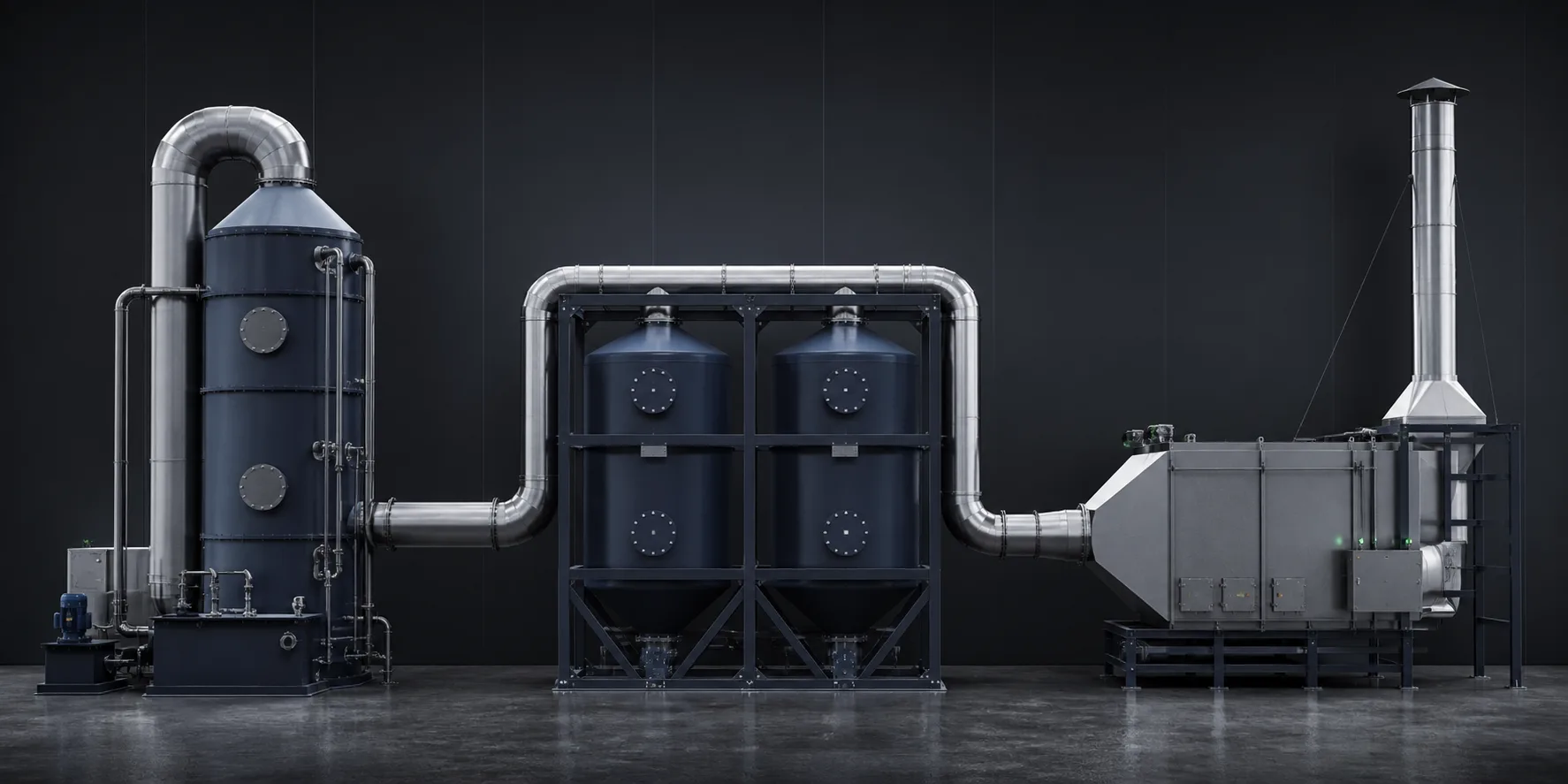
Industrial emissions vary depending on production runs, openings, cleaning operations and production rates. The critical scenario is just as important as the nominal value.
Allow for start-ups, shutdowns and cleaning operations that cause brief peaks.
Ensure that equipment selected on the basis of average conditions is not overloaded during critical phases.
Monitor temperature and humidity when these affect the effectiveness of the treatment.
Define, at the design stage, the measures required to verify actual operation.
These elements enable the identification of key unknowns and the preparation of a targeted measurement campaign.
Describe my emissions or call +33 7 57 69 08 40Key points to consider before comparing VOC treatment technologies.
Absorption transfers the gaseous compound into a scrubbing liquid. Adsorption fixes the molecules onto a solid. The choice depends, in particular, on solubility, concentration and the conditions for regeneration or replacement.
Oxidation can be considered where the flow rate and the compound lend themselves to this process. Concentration, temperature, variability and energy requirements must be examined before selecting a thermal, catalytic or biological method.
A treatment system designed for an average flow rate may become unstable during production peaks. The temporal profile of the exhaust flow helps to determine the appropriate extraction capacity and ensure the safe operation of the treatment stage.
Describe your installation, issue or objective. An AIRPRO engineer will provide an initial technical assessment.