Droplet size
Coarse particles separate easily; finer particles require appropriate coalescence and filtration.
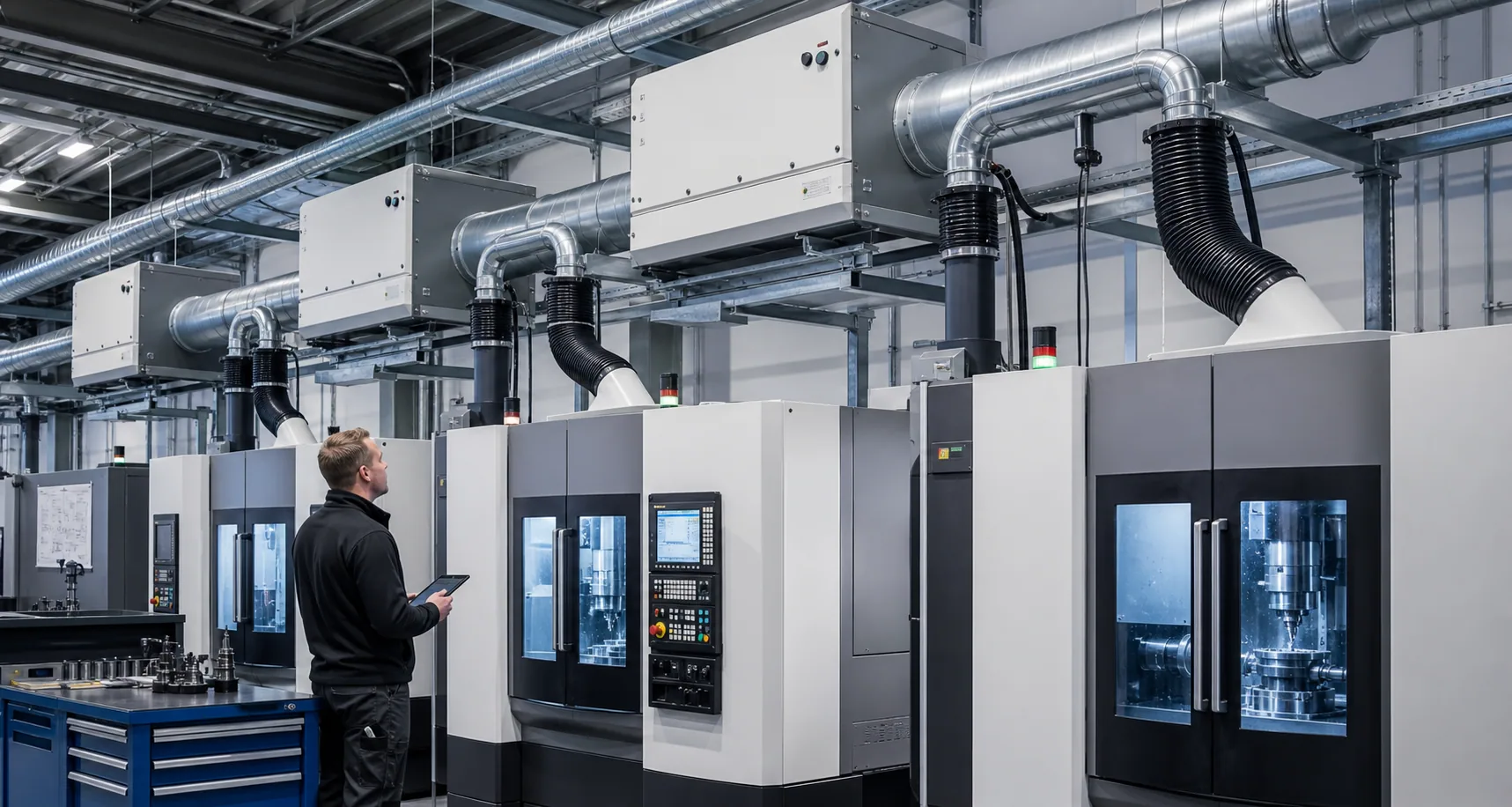
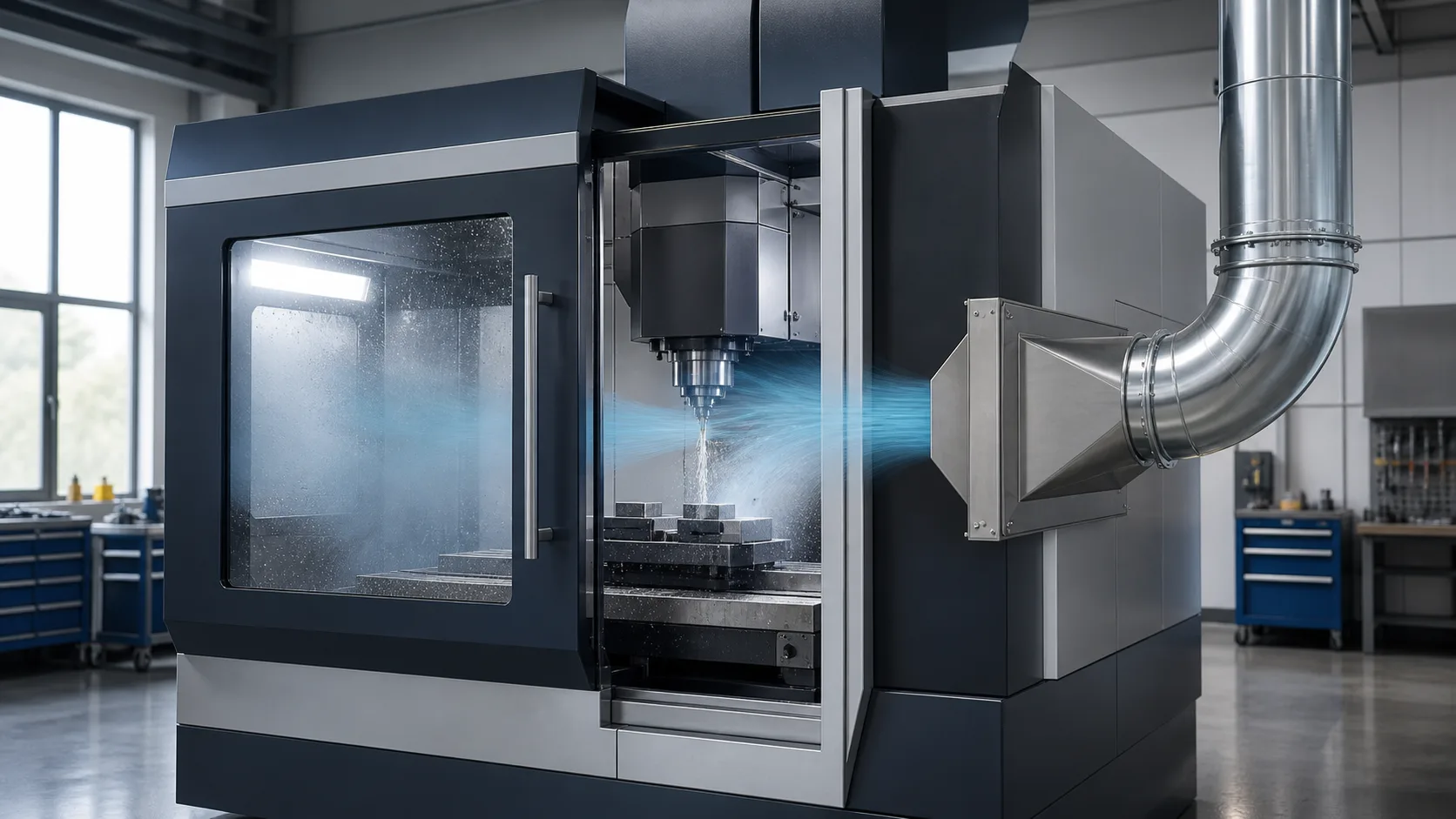
Capture aerosols as close as possible to the machinery, separate the droplets and restore cleaner working air.
 AIRPRO EXPERTISE
Separation depends on the distribution of the droplets and the fluid used. AIRPRO begins by linking the emission to the machine’s cycle before selecting the treatment stages.
Coarse particles separate easily; finer particles require appropriate coalescence and filtration.
Full oil, emulsions and additives do not produce the same aerosol or place the same demands on the media.
Machining, shutdowns and door opening result in very different emission patterns.
The flow rate and concentration determine the flow velocity, the effective surface area and the maintenance frequency.
The connection, door openings and purge time are designed in conjunction to protect the operator without disrupting the machining process.
A stable chain first removes the heavy fractions, protects the fine media and then facilitates the continuous drainage of the separated oil.
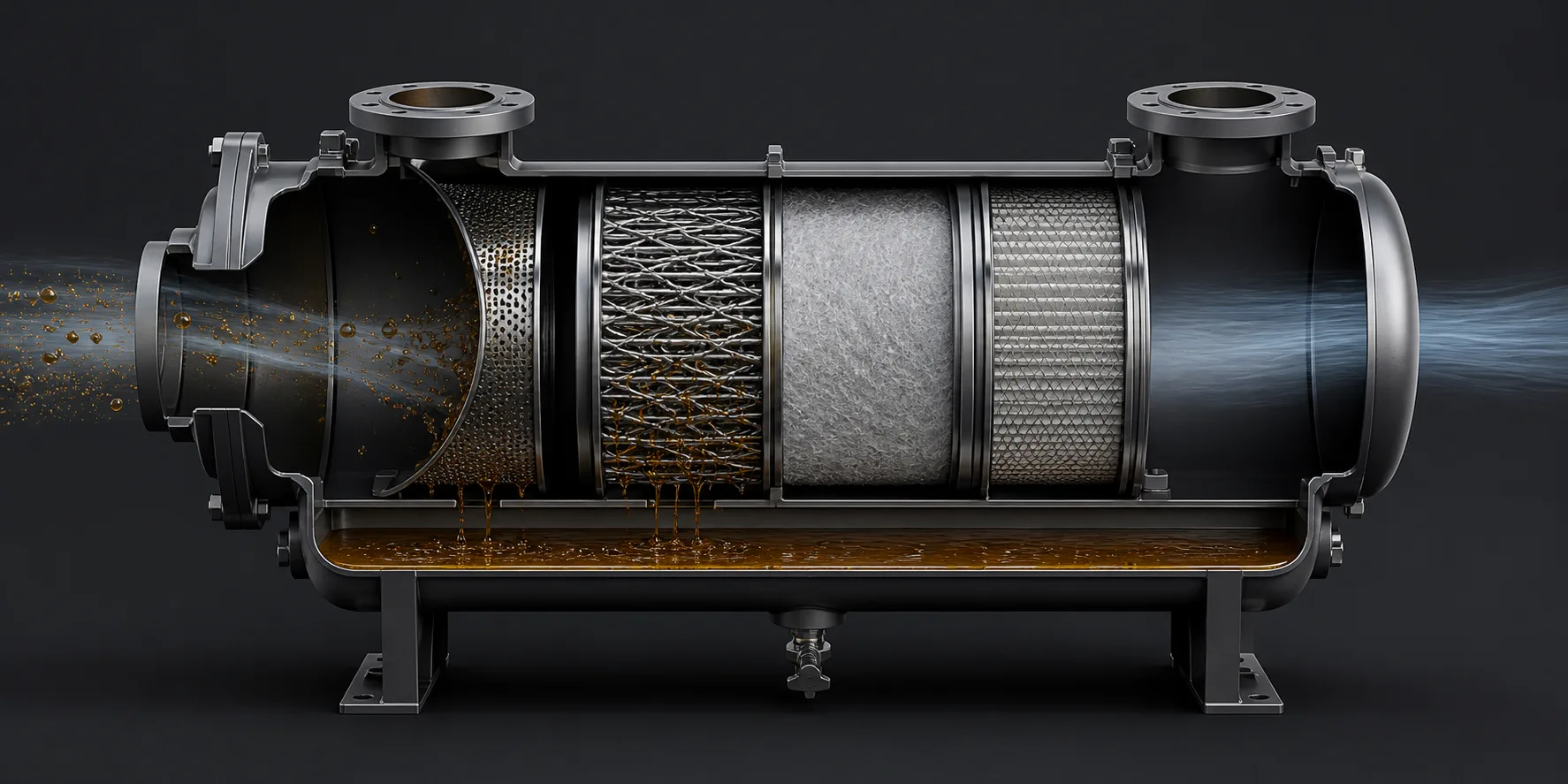
To stabilise the inlet flow and facilitate the separation of the heaviest droplets.
To cause the droplets to veer off their trajectory without placing an unnecessary load on the fine filtration media.
Collect the fine droplets to allow them to drain by gravity.
Discharge the separated oil without re-entrainment or stagnation within the unit.
Monitoring the machine, the system and the separator enables you to identify the appropriate measures to take before increasing the flow rate or replacing a filter.
Check the containment, the purge time and the position of the suction inlet.
Check for overloading, poor drainage, unsuitable media or clogging caused by particles.
Check for leaks, condensation, gradients and low points in the system.
Too high a flow rate can result in more liquid being carried and lead to unnecessary energy consumption.
The decision on air return to the workshop is not based solely on the nominal efficiency of a separator. The composition of the air flow, other emissions and maintenance must all be assessed together.
A few machine and process parameters enable a targeted specification to be drawn up and help avoid a system designed on the basis of overly general assumptions.
Describe my machine fleet or call +33 7 57 69 08 40Key considerations for planning an oil mist separation system.
Localised extraction prevents aerosols from spreading throughout the workshop and limits the volume of air to be treated. However, the connection must be compatible with the machine’s openings and operation.
The choice depends on the fluid, the droplet distribution, the load, the flow rate, the machining cycle and the required level of filtration. Several stages may be necessary.
This option must be assessed on a case-by-case basis, taking into account the air quality achieved, other pollutants present, the feasibility of monitoring and the requirements applicable to the site.

Describe your installation, issue or objective. An AIRPRO engineer will provide an initial technical assessment.